
Scoliosis Awareness Month 2026: The Role Healthcare Professionals Play in Earlier Detection
Jun 15, 2026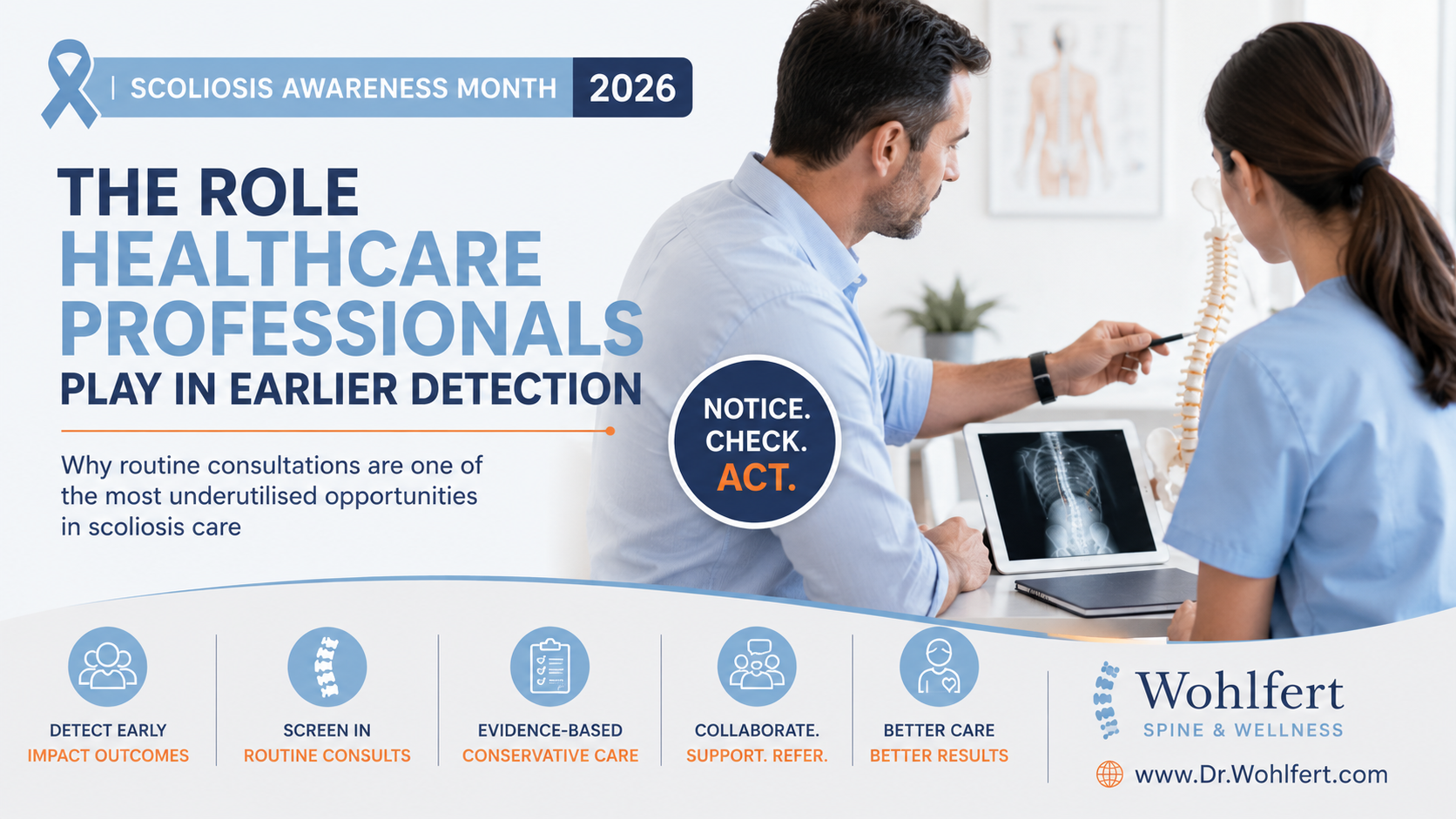
Why routine consultations are one of the most underutilized opportunities in scoliosis care
Every June, Scoliosis Awareness Month brings renewed focus to one of the most undertreated conditions in musculoskeletal health. This year's campaign – Notice. Check. Act. – is directed at the general public, encouraging people to look for signs of scoliosis in the people around them. But the same framework applies equally to the clinical setting.
For GPs, physiotherapists, chiropractors, and allied health professionals, routine consultations represent one of the most important – and underutilised – opportunities for early scoliosis detection.
The clinical case for earlier referral
Adolescent idiopathic scoliosis is most responsive to conservative management during periods of active skeletal growth, typically between the ages of 10 and 15. This is the window in which scoliosis-specific exercise and modern bracing systems have the greatest potential to stabilise or reduce a curve. Once skeletal maturity is reached, those options narrow considerably.
Yet referral to a scoliosis specialist is frequently delayed – often because scoliosis isn't the presenting complaint, because the patient reports no pain, or because the clinical assumption is that observation is the only conservative option available.
Each of these represents a missed opportunity. And in a condition where timing directly influences outcomes, delayed referral has real consequences for patients.
It's also worth noting that scoliosis is not limited to the adolescent population. Adult scoliosis – whether a progression of an adolescent curve or a de novo degenerative presentation – is frequently underdiagnosed in primary care, with symptoms often attributed to general spinal degeneration or lifestyle factors rather than an underlying structural condition.
What to screen for in routine consultations
Integrating a brief postural screen into consultations with patients across age groups takes only minutes and can be clinically significant. For guidance on how to detect scoliosis, ScoliCare's website provides a clear clinical reference. Key indicators include:
-
Asymmetry of the shoulders or shoulder blades
-
Uneven iliac crest height
-
Lateral spinal deviation in standing
-
Rib or lumbar prominence on Adam's Forward Bend Test
-
Patient or family-reported changes in posture or appearance over time
It's important to note that the absence of pain is not a basis for ruling out scoliosis. Many patients – particularly adolescents – present with curves that are progressing silently. By the time pain becomes the presenting complaint, the opportunity for early intervention may already have passed.
Conservative management has more to offer than many practitioners realise
The evidence base for non-surgical scoliosis management has grown considerably over the past decade. Scoliosis-specific exercise approaches – including SEAS and Schroth-based methods – and the ScoliBalance program developed by ScoliCare have demonstrated meaningful outcomes in curve management. Alongside modern asymmetric bracing systems such as ScoliBrace, these approaches offer a genuine non-surgical pathway for the right patients.
For patients presenting with curves in the 10–40 degree range and remaining skeletal growth, referral to a scoliosis specialist opens the door to evidence-based options that observation alone cannot provide. For adult patients, adult scoliosis bracing and targeted exercise can support pain management, functional improvement, and quality of life – even outside the growth window.
Early referral is not an overreaction. It is good clinical practice.
How ScoliCare supports your patients and your practice
ScoliCare clinics provide specialist scoliosis assessment and non-surgical management, and welcome referrals from across the primary and allied health spectrum. We provide detailed assessment reports to support continuity of care, and work collaboratively with referring practitioners throughout the patient journey.
For patients where surgical input may be appropriate, we also provide surgical referral support and work alongside orthopaedic colleagues to ensure patients receive the most appropriate care for their presentation.
This Scoliosis Awareness Month, we're encouraging everyone – patients, families, and clinicians – to Notice. Check. Act. For your patients in the growth window, a timely referral could be the most important clinical decision you make this June.
Ready to refer a patient or find out more?
Our team is here to support you and your patients every step of the way. Find your nearest ScoliCare clinic, explore our referral pathway, or get in touch directly.