
Scoliosis Awareness Month 2026: What Every Parent Needs to Know
Jun 08, 2026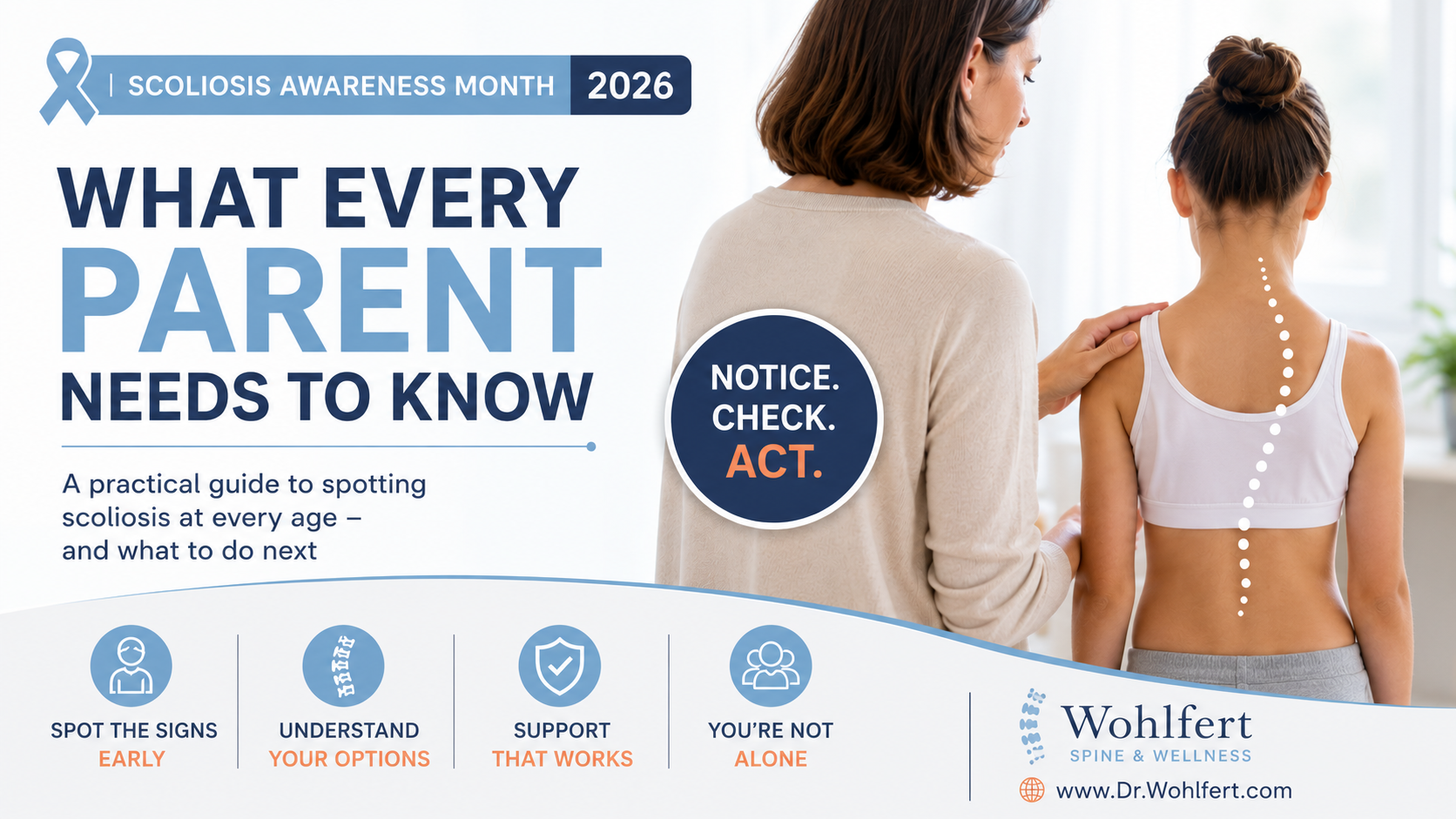 A practical guide to spotting scoliosis at every age — and what to do next
June is Scoliosis Awareness Month – and whether you're a parent keeping an eye on a growing child, or an adult who has noticed something changing in your own body, this one's for you.
Scoliosis affects around 3% of the population, and it doesn't discriminate by age. While many cases develop during adolescence, scoliosis can also present or progress in adulthood – and in both cases, the story is often the same: it develops gradually, quietly, and is frequently noticed by someone else before the person themselves.
This year's Scoliosis Awareness Month campaign – Notice. Check. Act. – is built around a simple truth: the people closest to us are often the first to notice something's changed. And when it comes to scoliosis, noticing early makes a real difference to what's possible.
Scoliosis in children and adolescents
Adolescent idiopathic scoliosis is the most common form of the condition, typically developing between the ages of 10 and 15 during periods of rapid growth. It's also one of the most manageable when caught early – which is why this age group is such an important focus for awareness.
In younger children, juvenile scoliosis develops between the ages of 3 and 9, while infantile scoliosis can present in children under 3. Though less common, both warrant the same early attention.
One of the most common reasons scoliosis goes undetected in children is that it often causes no pain. A developing curve can progress quietly through an entire growth spurt without any discomfort, making a visual check all the more important.
The next time your child is standing in front of you, take a moment to look at their back. Ask them to stand up straight with their arms relaxed at their sides, and check:
-
Are their shoulders level, or does one sit higher than the other?
-
Does one shoulder blade appear more prominent?
-
Do their hips sit evenly?
-
Is there a visible lean or curve in their spine?
You can also try the Adam's Forward Bend Test – ask your child to slowly bend forward with their arms hanging loose, as if reaching for their toes. A curve in the spine or unevenness across the back or ribs can become more visible in this position. For a full guide on how to detect scoliosis, visit our website.
Scoliosis in adults
Scoliosis doesn't always begin or end in childhood. Adult scoliosis can take two forms – an adolescent curve that was never treated and has progressed over time, or a curve that develops in adulthood, often as a result of spinal degeneration. Either way, the impact on daily life can be significant.
Adults with scoliosis may experience back pain, fatigue, stiffness, or changes in posture that have crept up gradually. Because these symptoms can be attributed to other causes – ageing, lifestyle, general wear and tear – scoliosis in adults is frequently overlooked or misattributed.
If you've noticed a change in your own posture, a difference in how your clothing sits, or discomfort in your back that you can't quite explain, it's worth getting checked. The same applies if someone close to you has commented on a change they've noticed. That observation matters.
What happens next
Whether it's a child or an adult, if something doesn't look or feel quite right, the next step is a professional scoliosis assessment. A specialist can confirm whether a curve is present, assess its severity, and outline what options are available.
For both children and adults, treatment is not always necessary – but understanding what you're dealing with is. And when treatment is recommended, the options available today go well beyond what many people expect. From scoliosis-specific exercise and ScoliBalance through to modern bracing systems like ScoliBrace, there are evidence-based non-surgical pathways available for the right patients.
This Scoliosis Awareness Month, take a moment to check your circle – and check in with yourself. It only takes a few minutes, and it could open the door to support that makes a real difference.
Noticed something that concerns you?
Don't wait and wonder. Use our free ScoliScreen tool for a simple guided check, or book an assessment with one of our scoliosis specialists today.